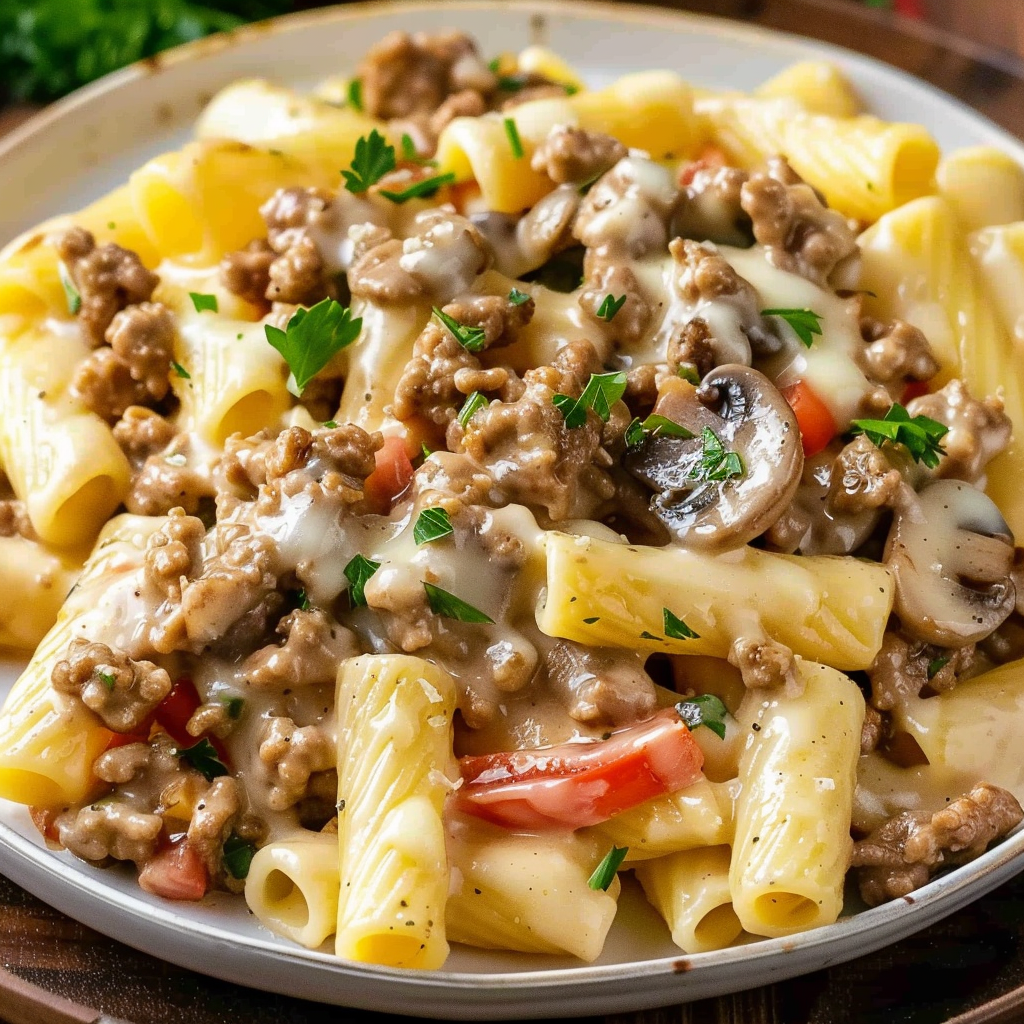

Growing up in Philadelphia, I always loved cheesesteaks, but this pasta version takes me right back to those childhood memories. The first time I created this recipe, my family couldn't believe how perfectly it captured the essence of our beloved sandwich in a pasta form.
Ingredients
- Rigatoni: Look for thick, ridged pasta that will hold the creamy sauce beautifully. Choose bronze-cut pasta for extra texture and sauce-gripping ability.
- Ground Beef: Select high-quality ground beef with good marbling for maximum flavor and tenderness. Lean beef works, but slightly fattier cuts provide more richness.
- Mushrooms: Fresh, firm mushrooms add incredible depth. White button or cremini varieties work perfectly, providing earthy undertones to the dish.
- Green Bell Pepper: Choose bright, firm peppers without blemishes. These add classic Philly cheesesteak crunch and fresh vegetable sweetness.
- Onions: Sweet yellow onions caramelize beautifully, releasing deep, complex flavors that complement the beef perfectly.
- Provolone Cheese: Select a high-quality provolone with excellent melting properties. Sharp varieties provide more intense flavor.
- Whole Milk: Full-fat milk creates the most luxurious, creamy sauce. Avoid skim milk for best results.
- Butter: Use unsalted, high-quality butter for creating a smooth, rich roux and adding depth to the sauce.
Instructions
Preparing the Pasta Base
Begin your culinary journey by bringing a large pot of salted water to a rolling boil. The water should taste like the sea – this is crucial for seasoning the pasta from within. Carefully add the rigatoni, stirring occasionally to prevent sticking. Cook until the pasta reaches that perfect al dente texture – firm to the bite but not hard, usually around eight to ten minutes. The pasta will continue cooking slightly when mixed with the sauce, so remove it just before it seems completely done. Reserve a small cup of pasta water before draining, which can help adjust the sauce’s consistency later if needed.
Creating the Flavor Foundation
In a spacious skillet, brown the ground beef over medium-high heat, allowing it to develop a deep, caramelized crust that brings out its rich, meaty flavors. Season generously with salt and pepper, creating those irresistible crispy edges that make each bite memorable. Once the beef is beautifully browned, transfer it to a separate plate, leaving behind those flavorful browned bits in the pan. These will become the secret weapon of your sauce, providing an incredible depth of flavor.

Storage Tips
Store leftover Philly Cheesesteak Pasta in an airtight container in the refrigerator for up to three days. The pasta will absorb more sauce overnight, potentially becoming even more flavorful. When reheating, add a splash of milk or reserved pasta water to restore the creamy consistency. Gently warm in a skillet over medium-low heat, stirring frequently to prevent sticking and maintain the sauce's smooth texture. Avoid microwaving if possible, as it can cause the sauce to separate and the pasta to become tough.
Serving Suggestions
Serve this hearty pasta in deep, wide bowls that showcase its creamy texture. A crisp side salad with a tangy vinaigrette provides a perfect counterpoint to the rich dish. For wine lovers, a medium-bodied red like Chianti or Zinfandel pairs beautifully, cutting through the pasta's richness. Garlic bread or toasted crusty rolls make excellent accompaniments, allowing diners to soak up any remaining sauce. For a complete meal, consider a light, refreshing dessert like lemon sorbet to cleanse the palate after this indulgent main course.
Cultural Context
The Philly cheesesteak, originating in Philadelphia during the 1930s, represents a quintessential American street food that has transcended its humble beginnings. Created by hot dog vendor Pat Olivieri, the sandwich quickly became a cultural icon, symbolizing the working-class culinary innovation of mid-20th century urban America.
Variations
- For those seeking alternatives, this versatile pasta dish welcomes creative modifications. Swap ground beef with ground turkey for a leaner option, or use plant-based ground meat for a vegetarian version. Lactose-intolerant friends can substitute provolone with dairy-free cheese alternatives or nutritional yeast for similar creamy richness. Gluten-sensitive individuals can use gluten-free pasta and replace wheat flour in the roux with cornstarch or a gluten-free flour blend. For a spicier twist, add some sliced jalapeños or a dash of hot sauce. Vegetable lovers might incorporate additional veggies like zucchini or spinach to boost nutritional content.

Pro Tips
- Cheese Melting Technique: Remove the pan from heat when adding cheese to prevent separation and ensure a smooth, creamy sauce.
- Pasta Water Magic: Always reserve some pasta cooking water to help bind the sauce and adjust consistency.
- Flavor Layering: Season each component separately to build complex, deep flavors throughout the dish.
- Roux Perfection: Cook the flour and butter mixture until it turns a light golden color to eliminate raw flour taste.
Frequently Asked Questions
Philly Cheesesteak Pasta
Sandwich meets pasta in this cheesy, beef-loaded comfort meal
Chef's Notes
- 1
Ensure pasta is cooked al dente for best texture
- 2
Can substitute cheeses if provolone is unavailable